1,700 km in Search of Humanity: Bunny, Honey, and Explosions
Reportage
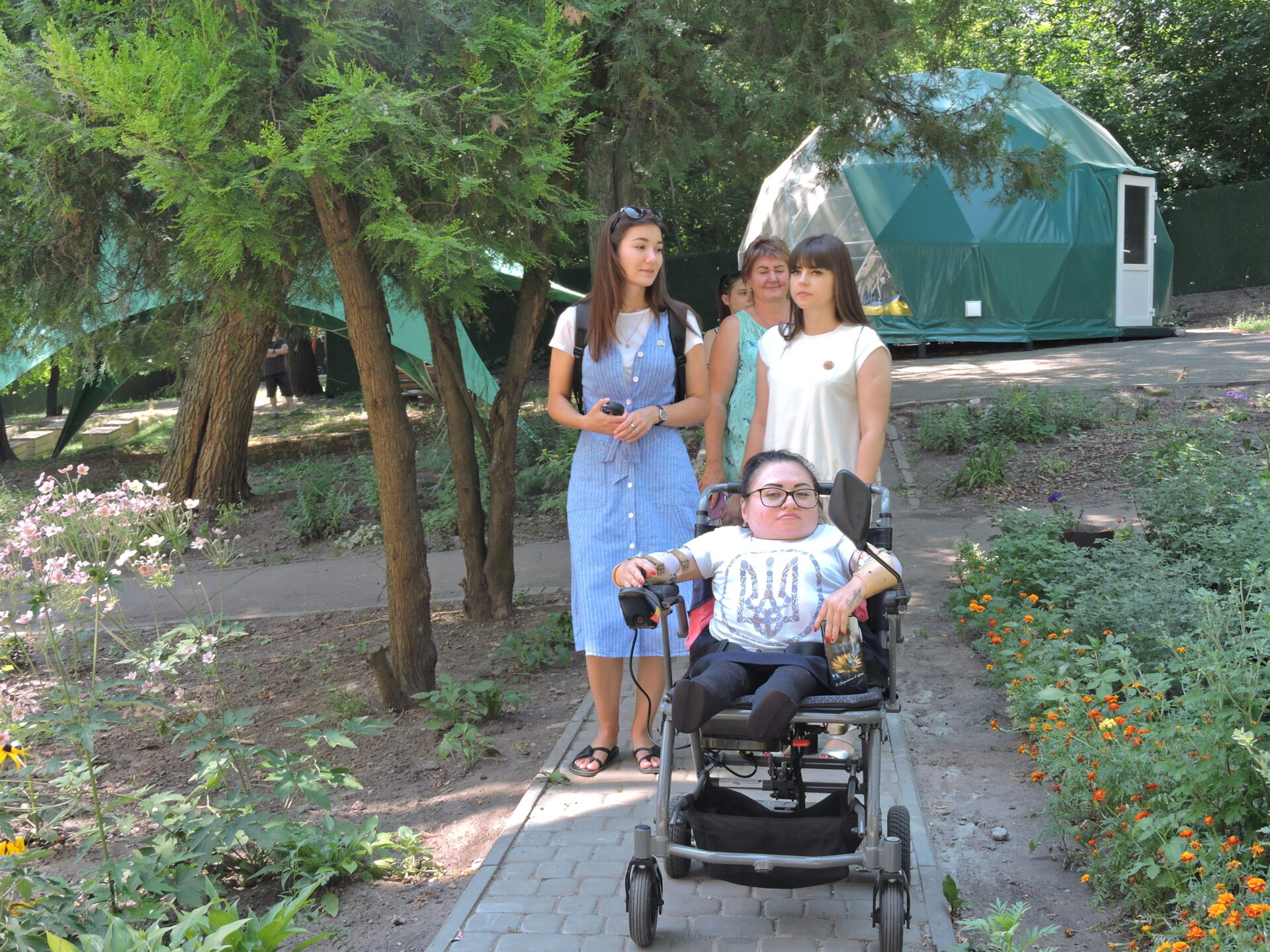
Almost 1,700 km in three days, covering nine regions, visiting four shelters, and having dozens of meetings. Our Fight For Right team traveled this route to work with experts on the ground and assess firsthand the importance of accessibility in disability shelters.
Stop 1. Plyskiv, Vinnytsia Region
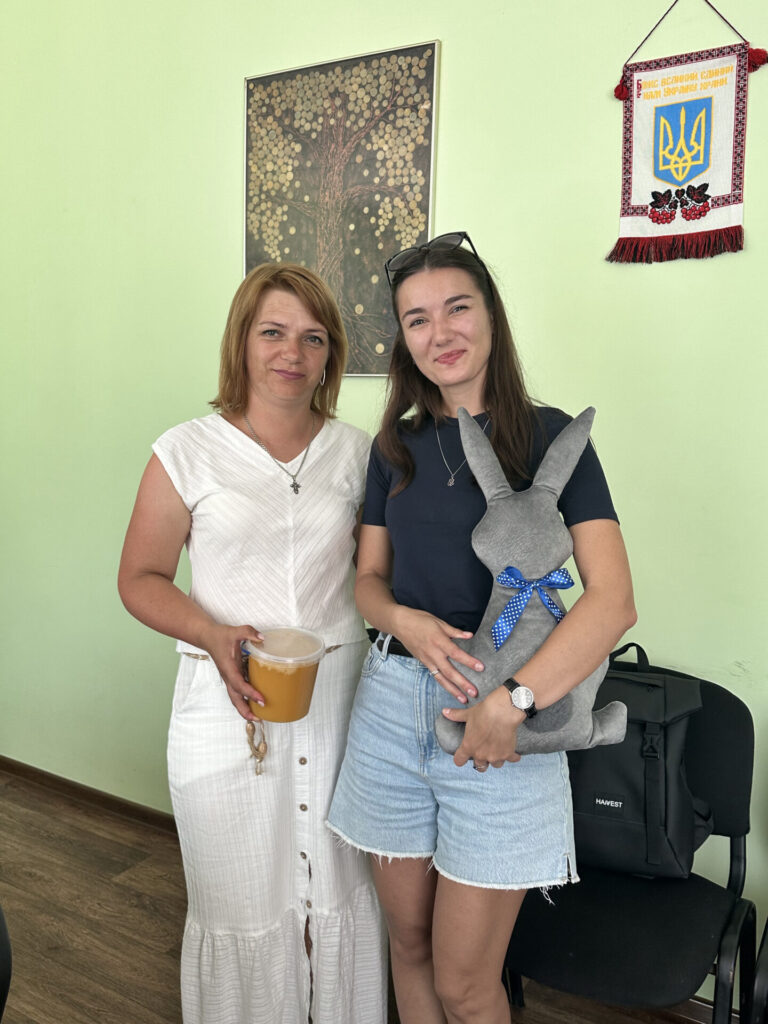
Our people are famous for their hospitality. On the first day, we received a bucket of honey with sincere wishes to help improve the accessibility of the shelter in Plyskiv at the Myloserdia social center of the Pohrebyshche community, as well as a pillow bunny, carefully made by resettlers, which became our talisman during the trip.
In the town of Pohrebyshche itself, there are no more vacant places for accommodating internally displaced people, so the restoration of abandoned buildings in the vicinity is common. It feels like they want to help as much as possible here, but they don’t have as much support from international and local volunteer organizations as cities closer to the front. A significant disadvantage of settling in nearby villages is the lack of infrastructure, workplaces, and other essential services.
The topography of the area in and around Plyskiv is interspersed with ravines and picturesque groves. It’s easy to admire this beauty from the car window, but walking even 200-300 meters to the nearest store is extremely difficult for a person with musculoskeletal disorders and impossible for someone in a wheelchair.
Almost all residents of the shelter are elderly people. Only 17 out of 48 people have registered disabilities. From the very first minutes, people talk about their chronic diseases and past surgeries. They also mention that they hesitate to obtain a disability certificate due to the bureaucratic nature of the process.
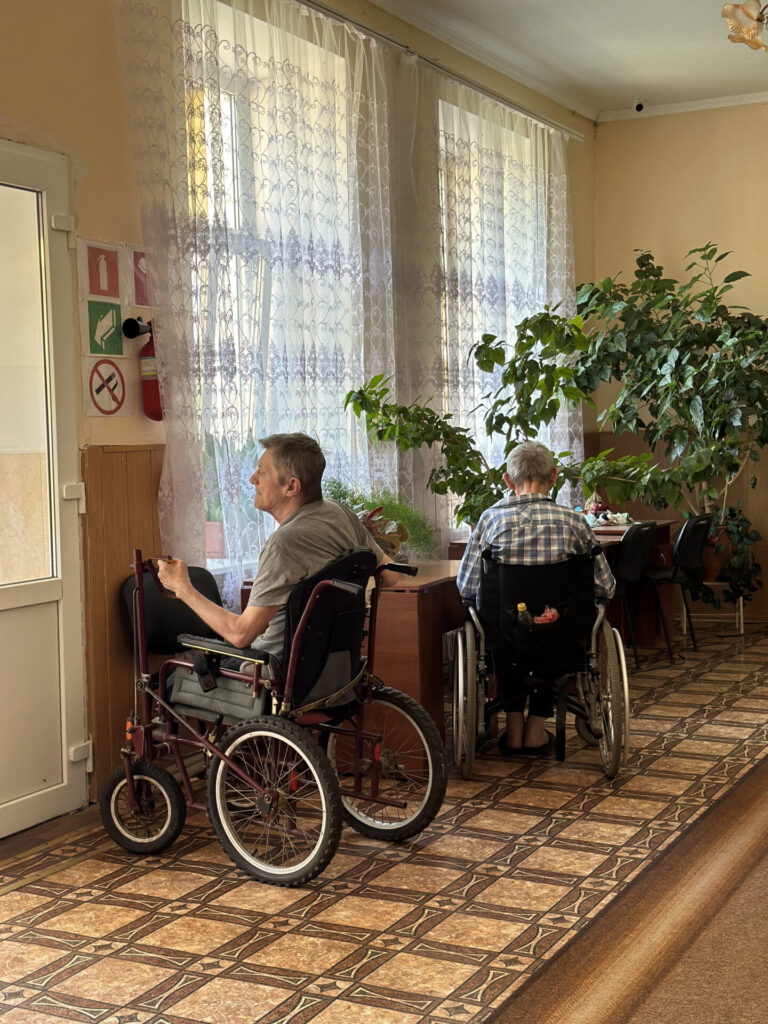
We met Anatolii (78) and Liudmyla (77), who have been living in a shelter in Plyskiv for six months. The family barely escaped Lysychansk in the Luhansk region at the beginning of April 2022. Using their own funds, they hired a transport service to drive them to Dnipro. From there, volunteers helped them reach Vinnytsia, where an acquaintance found them a room in a hostel.
“We are not displaced; we are refugees. There is a big difference between the two. In Dnipro, Liudmyla was in such a poor state that she was on the verge of collapsing. She has diabetes and several other chronic conditions. Liudmyla had an attack shortly after arriving in Vinnytsia. I was on crutches and couldn’t help her alone… With the help of volunteers, we reached the medical center, where they provided first aid and transferred her to the intensive care unit. It turned out Liudmyla had also suffered a stroke. We went through hell,” Anatolii recalls the difficult days. Since then, Liudmyla has been unable to get up, and her husband stays by her side at all times.
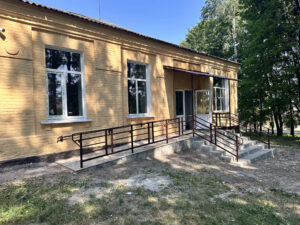
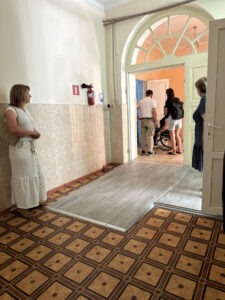
In the hostel in Vinnytsia, they had to pay for rent, utilities, and food for almost two years. With their pensions barely covering medicine and not enough left for proper meals, moving to the shelter in the village of Plyskiv became a true salvation for the couple. “They provide excellent services here. God bless them all. Please help them; they do so much for all of us. The fact that your organization installed a ramp, built an entrance and a floor, and purchased a new large boiler is already a tremendous help.”
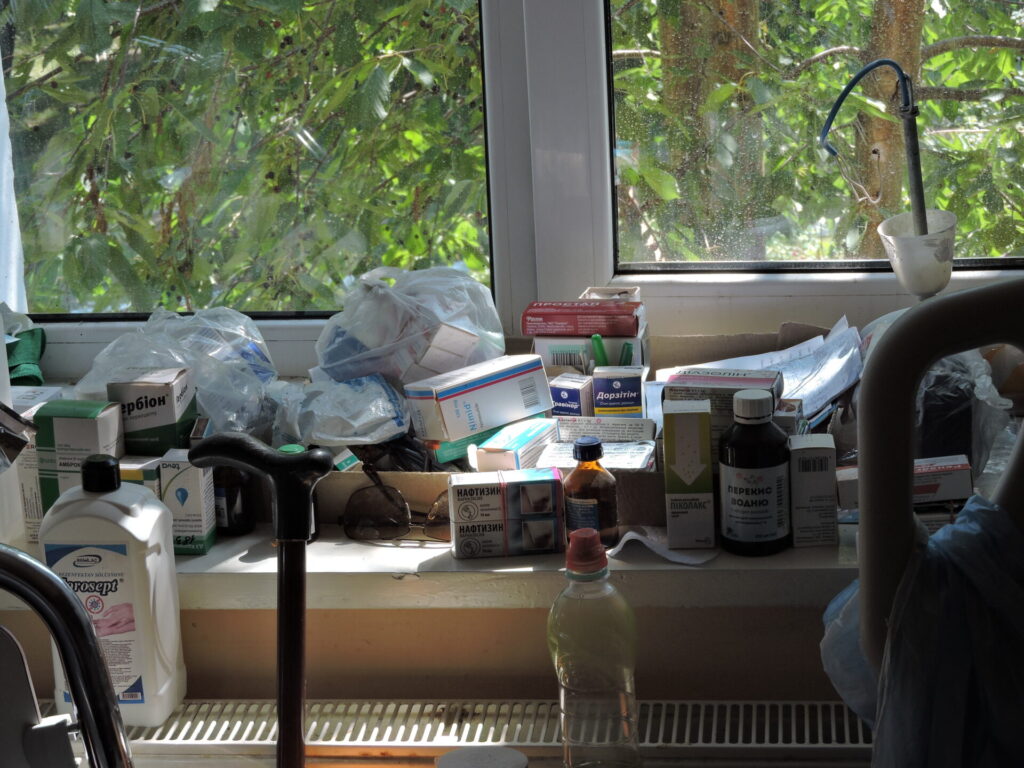
There is still an apartment left in Lysychansk, but the couple no longer hopes to return home. “Missiles were falling on our house… There is no gas or water in the town; everything is stolen or broken. The elevators don’t work, and occupants came and took over the apartments...,” Anatolii says, as he gazes thoughtfully at the windowsill, which is filled to the edge with medicines…
Currently, there is no space available to accommodate new people in the shelter.
“We cannot take in anyone at the moment because there are no available spaces. However, we plan to set up a few more rooms. I hope they can be equipped with accessible bathrooms, as this would greatly benefit the residents. If only we could find the financing…” says Liudmyla Vakoliuk, head of the Myloserdia Social Center, which has become a shelter for many internally displaced people.
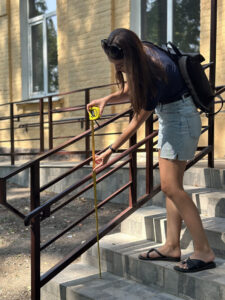
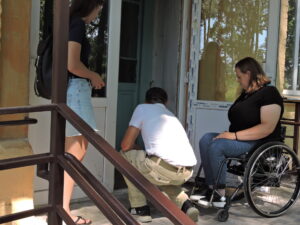
Liudmyla Netskina, head of the board of the non-governmental organization “Harmoniya,” visited the shelter with us as an accessibility expert. She also acknowledged the significant effort everyone is making to ensure accessibility and comfort for the residents:
“It is obvious that the team cares deeply about the residents and is committed to improving their living conditions not only with state funds but also through other sources, such as grants. With the mini-grant, work was done to equip the facility with barrier-free elements. A regulatory ramp was installed, and barriers inside the facility were addressed. While there is still much work to be done, the mini grant from Fight For Right helped the institution’s administration realize that there are many options for securing additional funds.”
We said goodbye to everyone as good friends, hoping that the shelter’s administration will be able to realize their plans and make the shelter and its surroundings fully barrier-free.
Stop 2. Mykolaiv
In Mykolaiv, we visited a small shelter run by the city territorial center of social services in the Inhul district, where 21 people live.
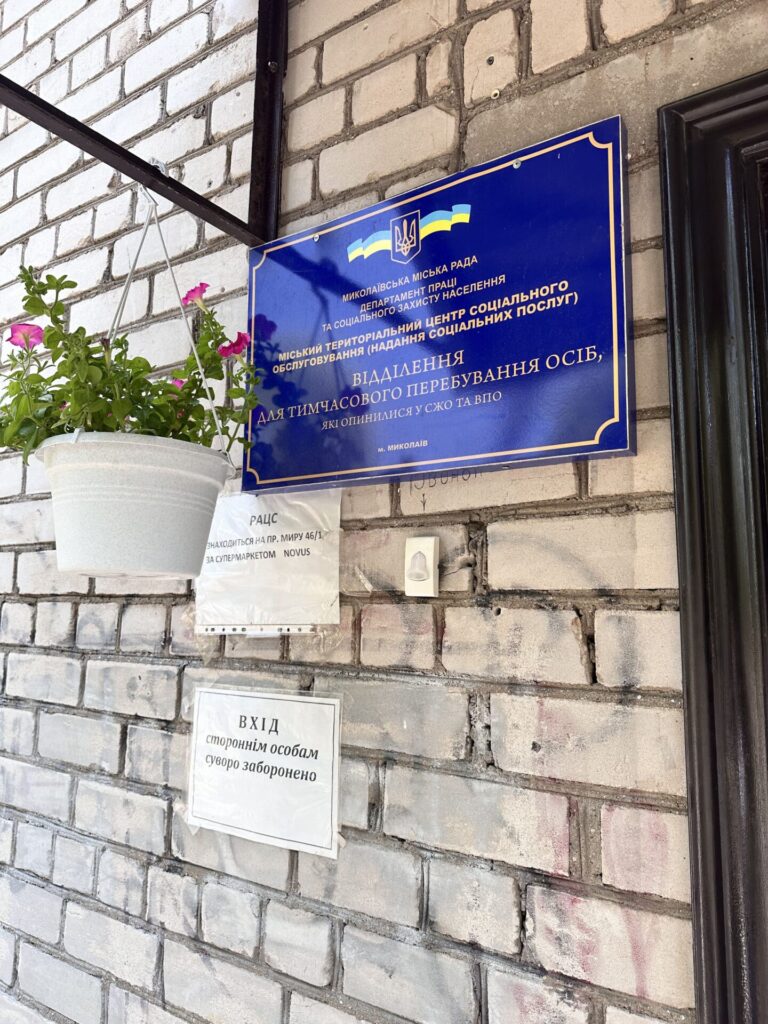
Up to 90% of its residents are elderly people. They are not used to complaining about the conditions; instead, they volunteer and have set up a room where they knit camouflage and warm items for defenders. Together, they take care of their temporary housing skillfully, making repairs in the rooms themselves so that more displaced persons can settle in. Additionally, a separate organization was created to buy abandoned houses, repair them, and provide them to families who lost everything due to the war.
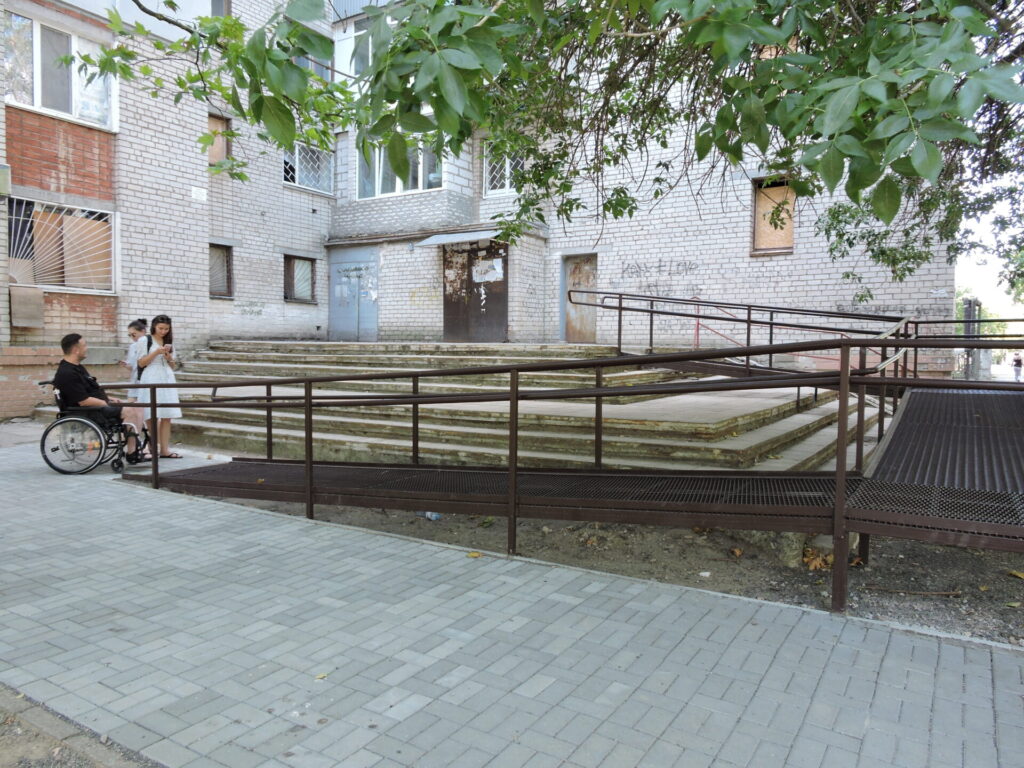
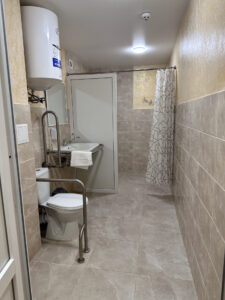
With the support of Fight For Right, an accessible ramp has been installed for the shelter residents, along with a renovated room and bathroom.
Yurii Stepanets, an expert and volunteer who is also a member of the Mykolaiv City Council, checked the shelter’s accessibility with us.
“The audit proved that ensuring accessibility for people with disabilities is extremely important… especially in times of war! Entrance areas, sanitary rooms, and bedrooms — basic necessities — are now accessible to people with disabilities. And it may seem primitive, but such simple guarantees like “free movement, hygiene, and rest” now exist not only on paper, in photos on the Internet, or in the dreams of people with disabilities in shelters, but in reality,” said Yurii Stepanets. He added that ensuring accessibility is not only a matter of comfort but also of upholding human rights. After all, in times of war, when many people are forced to leave their homes and seek shelter elsewhere, accessibility becomes critically important.
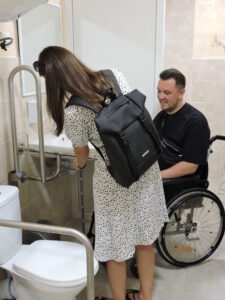
We spoke with an elderly couple, Lidiia and Mykola, who settled into a furnished room with the support of Fight For Right. The family was forced to flee from the village of Tiahynky in the Kherson region due to the war. Initially, Lidiia moved to Kherson to escape the relentless shelling in the fall of 2023. But Mykola still couldn’t bring himself to leave their home: “We had a house, a garden with so many varieties of grapes… We had everything — kittens, chickens, a dog… I kept thinking, how can I just leave everything behind and go?”
A month later, when the shelling intensified, Mykola decided to leave. He searched for a place that would accept him with all the cats (the neighbor’s cat had also given birth to kittens). He ventured between shellings to find the mobile connection on a hill behind the cultural center. Mykola was looking for someone to evacuate them from Tiahynka. After a few days, managing to get a connection, he requested evacuation. When he was returning home, at the very gate, the Russian military dropped explosives on him from a drone. He came to his senses in a hospital in Kherson. One arm could not be saved, the elbow joint was removed from the other arm, and his legs were damaged by shrapnel…
Months were spent undergoing surgeries and recovering at various hospitals in Kherson and Mykolaiv. His wife Lidiia was always by his side, even when they were “asked” to leave the hospital with still unhealed wounds, during rehabilitation, and as Mykola learned to stand and walk again…
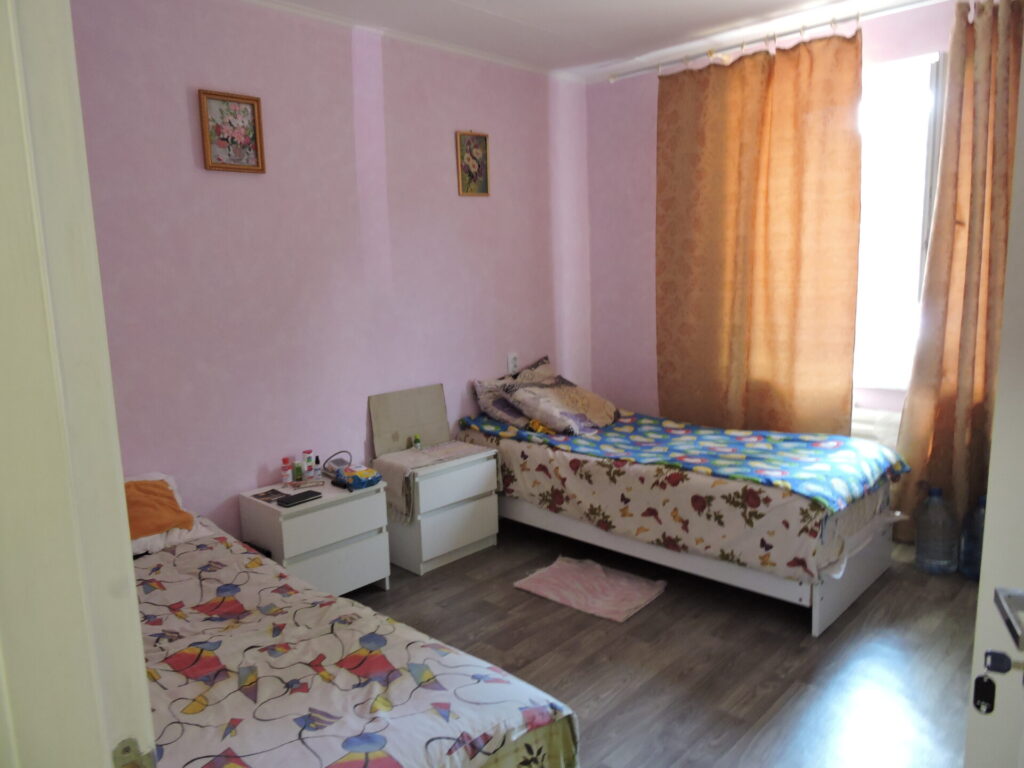
Today, the couple, along with other residents of the shelter, are visited occasionally by volunteers who help meet their basic needs. Thanks to the ramp, Lidiia and Mykola can go out into the city, with Mykola using a wheelchair. However, the man makes every effort to move without the wheelchair, despite the pain each step causes, even with the support of his wife…
The war has devastated the lives of almost everyone in the shelter and their relatives, taking everything from them. But what struck us was something entirely different: here, so close to the front line, the people we met did not hide in their grief. Our new acquaintances were incredibly bright and responsive, and we felt so comfortable and calm around them that we wanted to embrace them and be uplifted by their kindness.
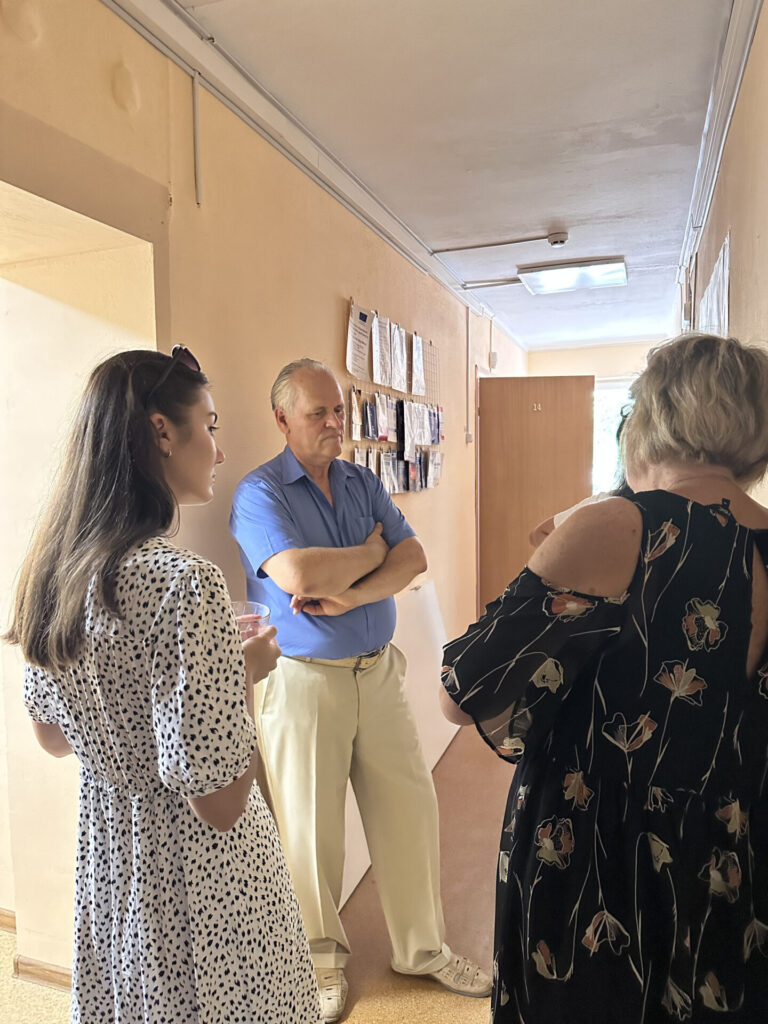
“Maybe you’d like some cold compote?” we heard from a smiling woman, and in an instant, we grabbed the entire tray of the refreshing berry drink… With temperatures reaching 39-41 degrees Celsius outside (and that’s in the shade!), we were tormented throughout the trip. But in Mykolaiv, the heat felt the most unbearable. The city, engulfed by the noise of power generators due to widespread multi-hour power outages and the hum of car engines, slowly allowed us to continue our travels.
Stop 3. Dnipro – 1
Both we and our expert, Olena Osadcha, head of the NGO “I know, YOU can,” left the first shelter in Dnipro, managed by the NGO “Light of Culture,” with positive impressions. Olena commented, “I returned from there delighted. It’s clear that they are doing everything they can for the people. I appreciated that they were interested in my opinion on the room arrangement as a wheelchair user, asking if everything was accessible, what needed to be changed, and how to make it as comfortable as possible.”
With the support of the mini grant, this shelter, located in a converted abandoned kindergarten, was able to equip the entrance area to meet accessibility standards. Additionally, they replaced the windows and insulated the walls adjacent to the renovated entrance.
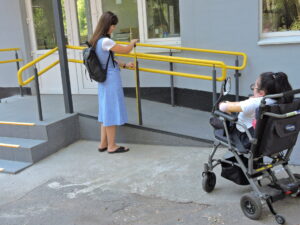
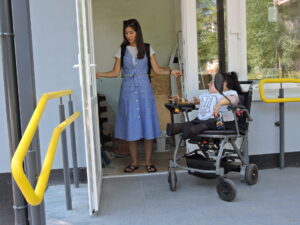
For more than two years, the shelter administration has successfully engaged many partners to carry out extensive repairs both inside the shelter and in the surrounding area. Inside, they renovated numerous rooms, a kitchen, a reading room, and set up a creative workshop. Outside, they installed a playground, a swimming pool, gazebos, and recreation areas with a stage and a tent.
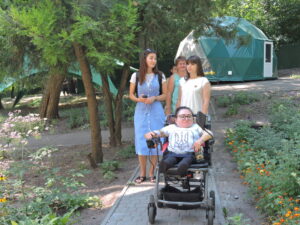
Currently, 110 people live here, including 24 children. There are only two people with disabilities, but 20% of the residents are elderly. Take, for example, Olha, who moved to the shelter from Lysychansk in the Luhansk region shortly after it was established. Later, she lived in a rented apartment for several months but returned to the shelter because the conditions were better here. “Everyone here is trying to do their best. Even with a large number of residents in the rooms, it’s not a problem; we find a common language with everyone,” said Olha.
We also spoke with Olena, who moved here from Stanytsia Luhanska with her two sons, Oleksii and Maksym, after the start of the full-scale Russian invasion of Ukraine. They made their way to Pechenihy through an established corridor, and from there, volunteers transported the family to Dnipro.
Currently, Dnipro is experiencing enemy shelling, so neither Olena nor her sons feel safe. Oleksii has been disabled since childhood and finds it difficult to walk. However, during air alarms, he goes out with his relatives into the corridor, behind two walls, as he often lacks the strength to descend to the basement. Most residents go down to the basement every time, as the windows have been blown out by explosive blasts more than once.
As we approached the shelter, several explosions were heard. We quickly ran into the building. Inside, the children were already sitting at tables drawing, some were sitting on the steps between the basement and the first floor, and some adults were seated on chairs along the wall near the stairs. In the absence of a designated bomb shelter — since you might not have time to reach the nearest one — the basement remains the only option.
After inspecting the shelter, we wished we could stay longer to chat with everyone, watch a movie, or enjoy a play together. However, we were already expected at the next shelter.
Stop 4. Dnipro – 2
In the shelter managed by the NGO “Dzherelo Pidtrymky,” it was possible to transform a small, inaccessible bathroom into a fairly spacious room. They updated the sanitary ware, installed handrails near the toilet, replaced the wall and floor coverings, and more. However, due to the terms of the lease agreement, the contractors were unable to arrange the entrance to the bathroom according to accessibility standards. Instead of the required 90 cm width, it is less than 80 cm. As for other issues, such as the lack of space under the sink and a mirror without a tilt, the administration began addressing these points shortly after our visit.
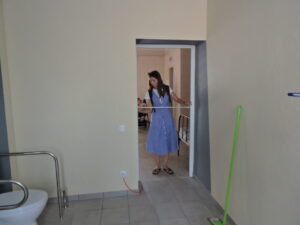
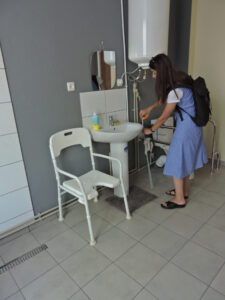
Additionally, some of the resources were used to repair the elevator, which had been completely nonfunctional before. However, restoring its operation proved challenging; the old elevator frequently breaks down, making it still difficult for residents with disabilities on the upper floors to move up or down.
We hope the contractors will diligently carry out the administration’s future plans with full adherence to state building regulations. There are plans to restore the rehabilitation center in one part of the building and to equip new rooms.
At the same time, we acknowledge that in this shelter, as well as in several others that “Dzherelo Pidtrymky” has established in Dnipro during the full-scale invasion, a great deal has been done for internally displaced people. With the support of international organizations, new washing machines, showers, and updated kitchens were installed here. Fight For Right provided residents with 14 heaters and 1 ecoflow, similar to previous shelters.
People are doing their best to make their lives as comfortable as possible. For most, even if the war ended tomorrow, there would be no home to return to, as their homes have been destroyed. For now, this shelter is their home.
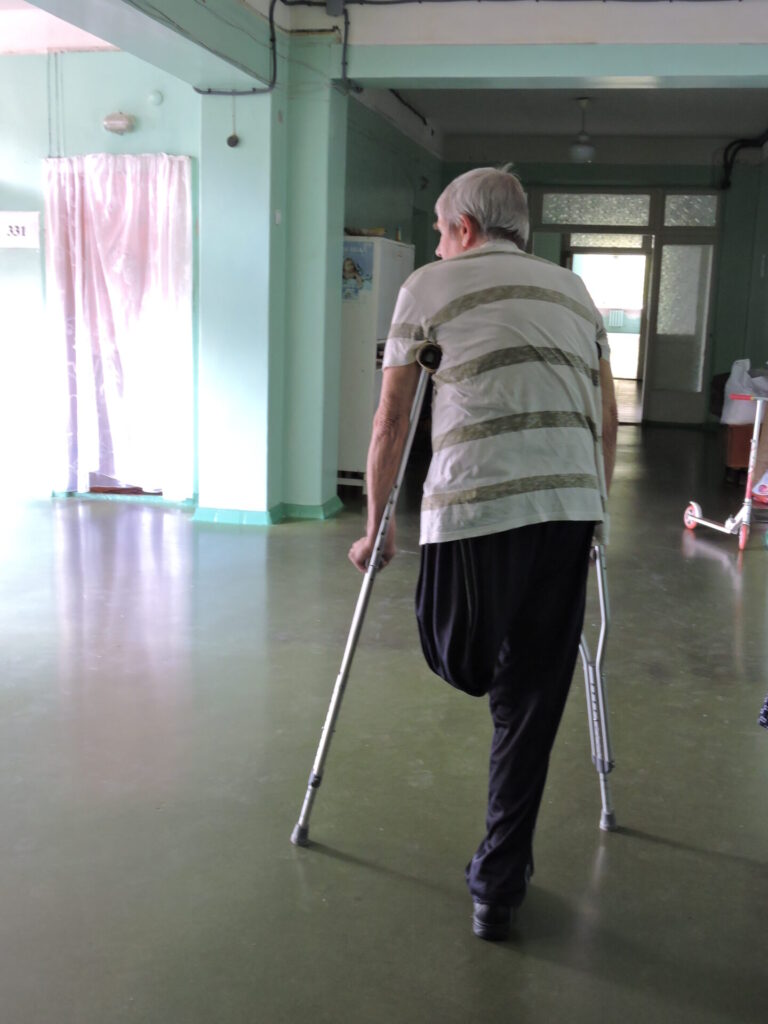
Currently, this shelter houses 170 residents, including 15 people with disabilities. Recently, many have arrived from Toretsk in the Donetsk region, where Russian troops are advancing.
On the third floor, we met Zinaiida, one of the shelter’s residents, who was helping her cat Musia stay cool by trimming the thick, soft fur from her back, sides, and belly. The woman moved here from Lyman in early May 2022, and she retrieved her cat, which had been left with a neighbor, six months later after the town was liberated.
Before the war, the woman worked as a pharmacist in Lyman, kept her house and surroundings tidy, and often reminisces about the picturesque flowers she grew. She and a friend once counted a total of 64 different varieties. She generously shared flowers with schoolchildren for the holidays, gave out seedlings to those who wanted to grow such beauty, but never sold them.
Zinaiida is adjusting to life in Dnipro while adding color to her daily routine:
“We thought we were coming for just two months, and now we’ve been here for the third year. We even grow cucumbers here on the third floor, in pots. Some people look for separate apartments and move if possible, as not everyone can adjust to sharing a kitchen with a dozen or more neighbors. Although, in my opinion, the conditions here are excellent. We were provided with dishes, bedding, blankets, sleeping bags, and humanitarian aid… We have everything we need. In addition, we regularly attend various performances, art workshops, and other creative events in the city.”

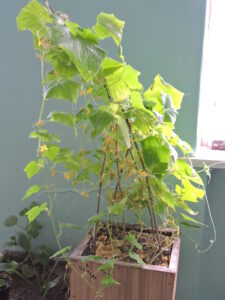
Zinaiida’s younger son and his wife live across the hall. They had a daughter while in the shelter. And this makes us very happy. Life goes on despite the war and everything else, and we hope it continues this way in the future…
Finally…
Every shelter we visited was unique in its own way. The most valuable aspect is when partners are open to collaboration, receptive to recommendations, and committed to following building standards to ensure convenience for everyone. We were outraged to hear the words, “We no longer accept people with disabilities.” People with disabilities need support the most during such a difficult time of war. Yet, due to the unwillingness to ensure accessibility in certain buildings, hundreds of people are forced to live under shelling because they have nowhere else to go…
According to data announced at the Ukraine Recovery Conference, as of early summer 2024, 4.9 million people have IDP status, and 300,000 people became disabled between 2022 and 2024. And the war is not over yet. The need for accessible shelters is very, very urgent.
As Yurii Stepanets noted, ensuring barrier-free access and accessibility is timely because it is:
– Safety: The absence of obstacles and the presence of appropriate conditions help prevent injuries and ensure a quick evacuation if needed.
– Dignity: People with disabilities must have equal access to all services, including sanitary facilities, living rooms, and other common areas, just like other residents.
– Social integration: Creating a barrier-free environment promotes the social integration of people with disabilities and improves their quality of life.
Internally displaced people with disabilities can strengthen any community if they have the opportunity to participate in its life rather than being confined within the walls of shelters or, worse, placed in residential institutions. Therefore, we urge all relevant organizations to contribute to improving accessibility in shelters. At Fight For Right, we are ready to offer expertise, share our experience, and assist with securing financial support if possible. Contact us and send your questions to project manager Karyna Hrytsiuk k.hrytsiuk@ffr.org.ua or to the organization’s email info@ffr.org.ua
The project “Barrier-free Safety for People with Disabilities” is the part of @INKuLturProgramme implemented by @Austausch e.V. together with Eastern Partnership countries funded by the German Federal Foreign Office.
Iryna Dovhal,
Valeriia Lukash (photo)