“I Can’t Risk My Children”: A Family’s Survival and Evacuation from Surrounded Hlukhiv
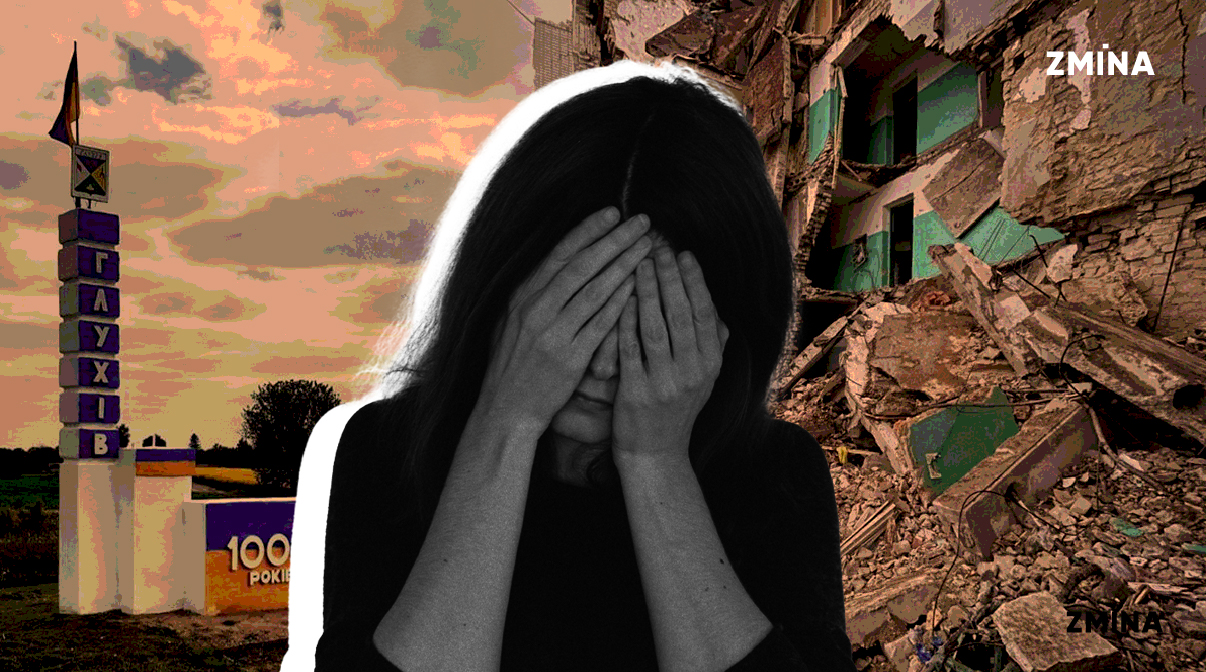
If we once discovered the names of distant small towns in various countries through movies, the world now learns about Ukrainian towns from news headlines shaped by war. Bakhmut, Vovchansk, Toretsk… Behind these names lie thousands of lives forever divided into “before” and “after,” countless abandoned homes with darkened windows, and the harrowing evacuations of entire families…
In recent months, evacuations from the border areas of the Sumy region have become increasingly frequent. Names like Bilopillia, Seredyna-Buda, and Hlukhiv are appearing more often in the news. It was from Hlukhiv that Ksenia and Oleksandr, along with their two school-age sons, Sviatoslav and Myroslav, were forced to flee at the end of the summer. In this family, both the husband and the eldest son live with disabilities.
How did the family cope during two and a half years of living under shelling in a town less than 10 kilometers from the Russian border following the full-scale invasion of Ukraine? What took the longest to adapt to in their new city? Ksenia shared her experiences in an interview.
Surviving Under Siege
Hlukhiv had no strategic facilities, so at the start of the full-scale war, Russian troops passed through the town, aiming to capture “Kiev in three days.” However, the townspeople found themselves surrounded.
“On the first day of the invasion, February 24, at four in the morning, the shelling of the checkpoint began,” Ksenia recalls, referring to the two border checkpoints near Hlukhiv — Bachivsk and Katerynivka-Ed. “Military equipment rolled through the town, with tanks moving in columns toward Kyiv, Chernihiv, and Sumy. It was too dangerous to go outside or evacuate, as Russian forces fired on cars and checked the documents of anyone trying to leave. So, we stayed at home.”
All supply routes to Hlukhiv for food and medicine were blocked. The town’s curfew, starting from the first days of the invasion, lasted from 4 p.m. to 9 a.m. The town fell silent. People tried to survive by buying whatever was left in the stores, though the shelves were nearly empty. Pharmacies remained open, but finding essential medicines often required searching multiple locations.
“The children just got sick, and we had to visit every pharmacy to find the necessary medicines. We could only pay in cash, as cards were rarely accepted. There were long queues at ATMs, and those who managed to withdraw money could buy what they needed,” says the woman. “In the first few days, everyone was panicking, but as the situation stabilized a bit, we adapted to life under such conditions.”
According to the family, the police left the town before the war began, leaving Hlukhiv virtually without support. Soon, the enemy columns were defeated near Sumy. People regained their composure and began organizing the defense of their town. They made Molotov cocktails and built barricades to protect themselves.
In fact, the local TV and radio station, where Ksenia’s husband, Oleksandr, works as a technical operator, continued to operate without interruption.
“I handled requests and repaired the internet… and overall, the work continued, though I was scared, like everyone else in that situation.”
Later, people from neighboring villages began bringing food — meat and dairy products — to the bazaars, despite the great risk involved.
“We partially survived thanks to the supplies we had bought earlier. On the first day of the invasion, like everyone else, we panicked and bought cereals, frozen food, and other essentials. We have two small children, and, of course, they were our top concern.”
When they went out into the town, Ksenia explained to her sons why there were so few goods in the stores, reminded them to return home during air raid alerts, and taught them where to hide in safe places.
“We didn’t have any shelters at the beginning of the war, so we hid wherever we could. In multi-story buildings, the basements were often cluttered or locked. Like most people, we took shelter in the bathroom or hallway, following the two-wall rule.”
The Russians retreated from the Sumy region in the spring of 2022. They withdrew from the border, blew up bridges, and then halted nearby.
Two Years of Illusory Security
Despite its proximity to the Russian border, Hlukhiv was largely spared from heavy shelling and was considered relatively safe. People from neighboring villages, which faced much more frequent shelling, even moved to Hlukhiv for refuge.
“We thought that maybe the Russians simply didn’t see the point in firing at our town — we had no factories or other important infrastructure. When the large bombs were dropped, it was truly terrifying. But it was rare.”
Months of air raid alarms and nearby shelling… but not in the town. The vague illusion of security led the family to believe they could stay home until the war’s end. This lasted for more than two years. However, in the summer of 2024, the situation worsened significantly due to regular Russian Shahed drone strikes, artillery attacks, and military clashes in the Kursk region. The town was bombed almost daily by the enemy.
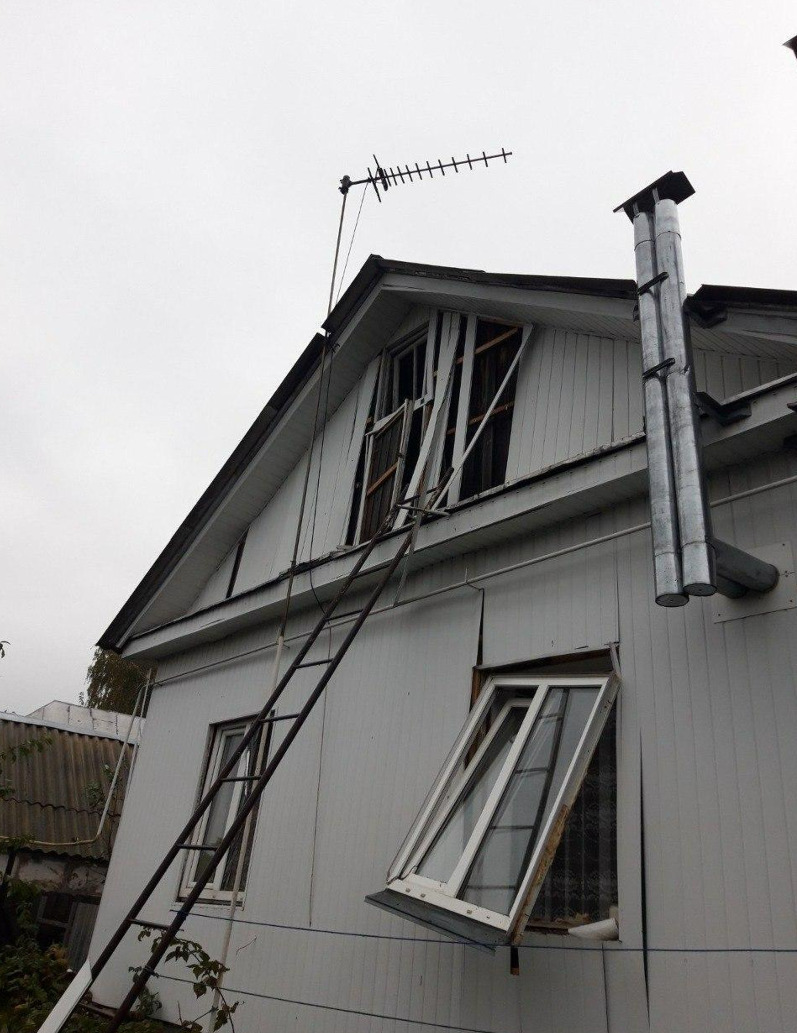
Photo credit: Hlukhiv INFO
“We realized it was time to evacuate because it was becoming too dangerous. My father drove us to Vinnytsia and then returned to Hlukhiv, to his home and his job. No matter how much we tried to persuade my parents, or my husband’s mother and stepfather, who live in Bilopillia, they didn’t want to leave,” the woman says regretfully.
A few days after the family had left, an enemy shell exploded near their house, shattering the windows in Ksenia and Oleksandr’s apartment. The blast also blew off the balcony door. Ksenia’s father came and did his best to secure everything.
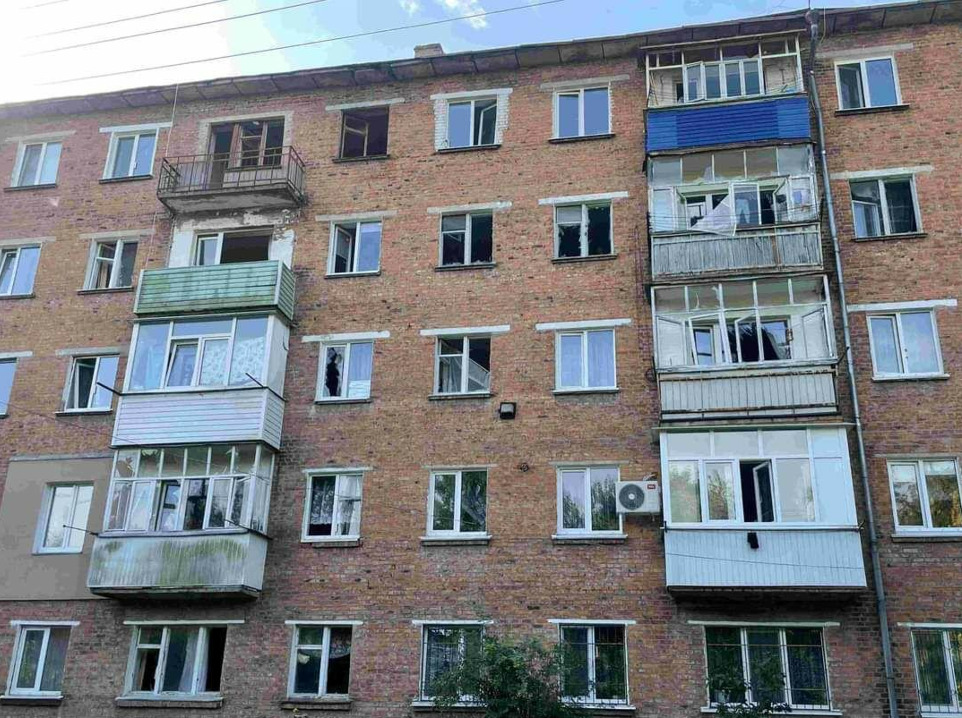
Photo credit: Hlukhiv INFO
Such cases are not uncommon. Almost every week, new windows are shattered, and there is shelling from artillery and aerial bombs. Enemy drones now frequently fly over the town, further threatening people’s lives. The town has suffered extensive damage, with ruined schools, sports fields, a hospital, and other infrastructure.
But the most painful thing for Ksenia was hearing about the deaths of children from enemy attacks. At the end of July, as a result of enemy shelling in the central part of Hlukhiv, a teenager was killed, and 13 others, including 7 children, were injured.
Ksenia adds: “It was scary to go outside because at any moment there could be Grad rockets or other artillery fire. And due to our proximity to the border, explosions usually happen first, and the alarm sounds only afterward.”
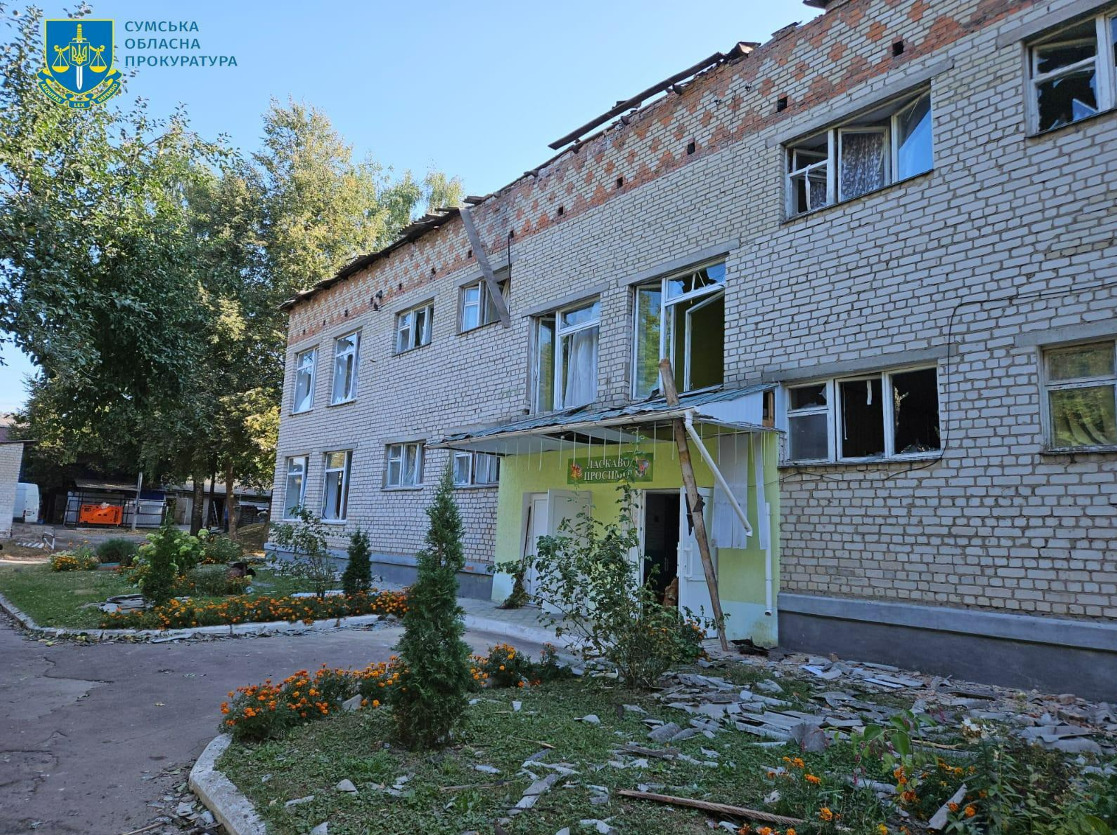
Photo credit: Sumy Regional Prosecutor’s Office
According to Ksenia, many people left at the beginning of the full-scale invasion, but some returned because they couldn’t survive in a new place, struggling to live on IDP assistance or find work. Many are now afraid to leave Hlukhiv, uncertain of what awaits them in a new location.
“Because it’s quiet here”
In Vinnytsia, where the family relocated, finding housing was a challenge. Not all landlords were willing to rent to a family with children or displaced persons, and some set the rental price too high. However, it was here that Sviatoslav finally received the medical care he needed, and both sons were able to study offline. After a month of searching, the family finally found a rented apartment.
Now, Oleksandr continues to work remotely, while their sons, after years of studying online, are finally attending a nearby lyceum.
“Over the years of the Covid-19 pandemic and the war, with schools closed since February 24, 2022, our eldest son, who is 12, got used to online learning and initially didn’t want to go to the lyceum. The transition was easier for our younger son, as his primary school teacher in Hlukhiv made great efforts to ensure the lessons were thorough, and the children attended classes whenever there were no air raid alarms.”
Due to air raid alarms in Hlukhiv, lessons were often canceled. Some days, there might only be one or two lessons. Naturally, the parents wanted to give their sons the chance for a proper education and better living conditions.
In Vinnytsia, they found everything they were looking for. While air raid alarms are still frequent, forcing the children to interrupt their studies and go to shelters, it is much calmer here than in Hlukhiv.
“The younger son was a little scared at first because any loud sounds — cars, motorcycles, or construction noise — reminded him of the shelling. I constantly reassured him that everything was fine, that it was peaceful and safe here. In Vinnytsia, shops don’t close during air alarms, and people remain calm. We chose this city because it’s quiet and there’s virtually no shelling,” Ksenia adds.
In addition, the family receives support from charitable organizations, including the non-governmental organization Fight for Right, which advocates for people with disabilities.
What makes the woman happiest is that medical services are available in Vinnytsia. In Hlukhiv, there were no specialists to treat Sviatoslav, so they had to travel to the regional center. Sviatoslav was born with a bilateral cleft lip, gums, and palate, and he primarily needs orthodontic consultations. He has already undergone several surgeries, with another one planned soon.
“My son regularly undergoes orthodontic treatment, which is a significant cost, as the state does not cover it. Treatment includes making casts, wearing fixed devices, and now braces to align the teeth. Children with a cleft palate often have breathing problems and are prone to frequent otitis. We regularly visit an ENT specialist, dentist, pediatrician, and surgeon. This requires not only financial, but also emotional resources,” says the woman.
Ksenia has a higher education and is open to considering part-time work, even for just a few hours a day, to help share the financial burden with her husband.
“It is very difficult to plan for the future right now. We will continue our son’s treatment and plan visits to doctors. In a few years, he will need another surgery. We can’t return home yet. I can’t risk my children, because if danger strikes again, like on February 24, 2022, it will be difficult to evacuate. Our situation is not easy: my husband needs support with movement due to cerebral palsy. Although he is independent, it is still challenging, especially with children.”
In the meantime, as a family, they dream of Ukraine’s victory and of returning to their long-suffering town with its rich Cossack history—home to their beloved Hlukhiv — once the war is over.
***
At the time of writing this article, another attack by Russian Shahed drones targeted Hlukhiv, resulting in the deaths of 12 people, including one child. Most of the victims had recently moved to Hlukhiv from the villages of Sumy region in search of a safer place to live and were residing in the dormitory of a local medical college. Our condolences go out to the families of the deceased.
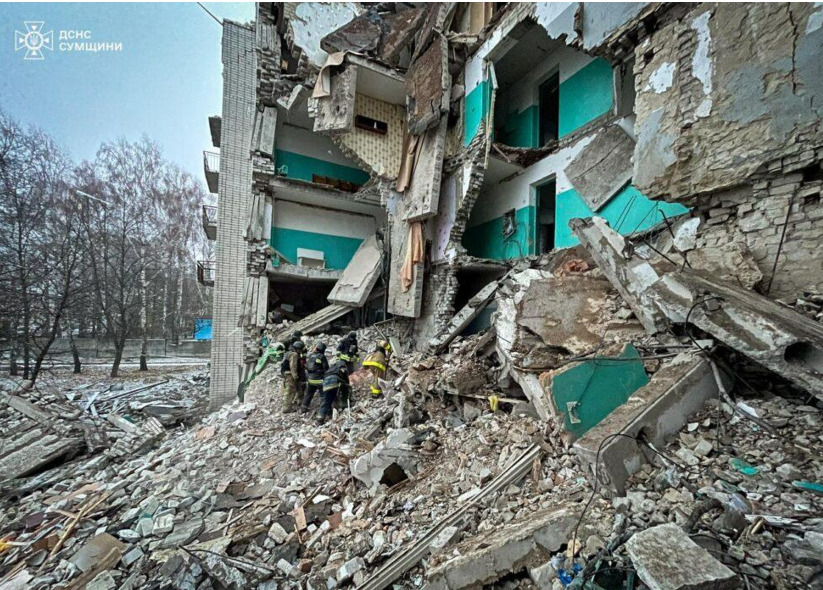
Photo credit: State Emergency Service of Sumy region
As of the end of September 2024, according to the head of the Hlukhiv territorial community, nearly a third of the town’s population, including almost 70% of its children, has already been evacuated from Hlukhiv. Mandatory evacuation has been announced in the town.
Fight for Right urges evacuation from frontline settlements and offers assistance to people with disabilities and their families. If you need evacuation or other help, please call the hotline at 0 800 30 66 33 or send a request and information about yourself via email to help@ffr.org.ua.
The project “Barrier-free Safety for People with Disabilities” is the part of @INKuLturProgramme implemented by @Austausch e.V. together with Eastern Partnership countries funded by the German Federal Foreign Office.