“We have to stop investing in new closed institutions for people with disabilities”, – Head of Fight For Right Yulia Sachuk

On 18 August 2023, Fight For Right, together with its partners Validity Foundation – Mental Disability Advocacy Centre International Disability Rights International (DRI) Disability Rights International – Ukraine held an interactive panel discussion “UKRAINE RECOVERY: Humanitarian Donors’ Obligations Should Ensure Inclusion, Not Institutions for Persons with Disabilities” dedicated to the first anniversary of the Guiding Principles on Deinstitutionalisation with the support of the UN Committee on the Rights of Persons with Disabilities (CRPD).
In her speech, the Head of Fight For Right, Yulia Sachuk, spoke about the situation in Ukraine in the context of the institutionalization of people with disabilities, the main issues associated with it, and asked partners from the EU and the European Commission to support develop a deinstitutionalization reform.
I’d like to start with thanking CRPD Committee for letting us have this side event and giving a platform to rise concerns and propose suggestions and all of you to come here today to listen – this shows us that the topic we discuss today is important.
We welcomed Committees’s work last year – a Guideline on the Deinstitutionalization is very much needed. And we welcome this year discussion on Guidelines implementation. Our side event is mean to start discussion on how to implement Guideline in a pretty complex context, in Ukraine right now.
Few things I want you to keep in mind when thinking and talking about Guidelines and its implementation:
- Ukraine has unprecedented international support since last – many humanitarian actors and states united in providing funds and expertise to help us recover from russian aggression and damage caused. We are thankful indeed! At the same time this unprecedented support and enormous funds require some structuring and focus when it comes to ensuring needs, will and preferences of all Ukrainians are met.
- Ukraine has a huge institutional system where thousands of people live permanently – children with and without disabilities, adults with disabilities and elder people. Unfortunately institutions had been affected by war and damaged. We had been last year here in Geneva talking about how unprepared Ukraine been to ensure safety and protection of civilians living in institutions.
- Ukrainian social protection system is relaying very much on residential care as a core care service, this system covers thousands of people and a lot more are in need of support services in the communities because of the forced internal displacement and might be facing institualisation.
- Ukrainian social protection system eats huge budget and as a country is still facing war and its consequences we do not have enough funds to fill this budget and relay pretty much on donor help.
- Ukraine also has ambition to get an EU membership one day and had been granted a candidacy status which comes with a bunch of commitments and obligations. Recent EU developments are showing EU commitment to implement the CRPD Convention to the fullest extent possible and EU position on institutions. We read this sign as EU is no longer consider residential care services as best option in terms of human rights, this is what Convention says and a Guideline explains.
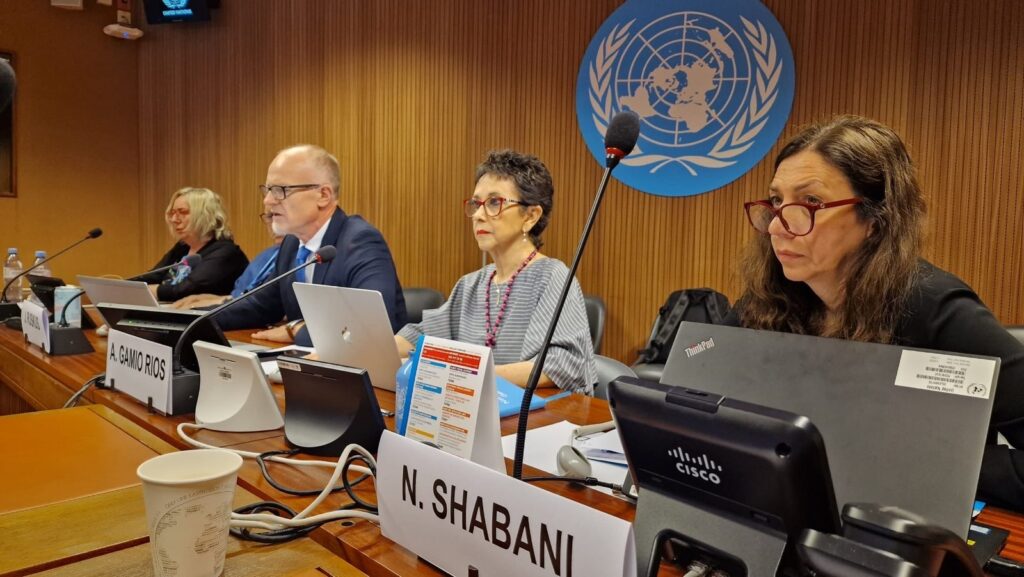
Fight For Right with partners Validity Foundation – Mental Disability Advocacy Centre International & Disability Rights International (DRI) Disability Rights International – Ukraine
And here we come to complicated situation Ukraine faces:
- Ukrainian legislation still allows legal capacity restrictions and guardianship which leads to massive institutionalisation
- There are obviously institutions and tens of thousands of people inside who need urgent humanitarian support
- There are requests to provide reconstruction of damaged institutions because people need decent living conditions
- There are monitoring results, including our FFR work last year and this year which shows that living conditions in many institutions are very far from decent and human rights, and this is not because of the war, it is because institutions are humiliation of dignity themselves. These results also demonstrates that institutions are not the places of “protection for persons with disabilities” at all as many institutionalisation supporters argue
- Ukraine doesn’t supported decision-making mechanisms, which limits people with disabilities in exercising their right to equal recognition before the law and creates additional challenges during the war
- There is also a dramatic lack of accessible housing in Ukraine and community-based support services right now and more people face institualisation because of that and also poverty – ending up “temporary” living in so-called sanatoriums which are a new form of institutionalisation
- There are lots of resources and efforts humanitarian actors channel into residential care system support right now cementing existing inequality
At the same time we see:
- Gaps in knowledge about the CRDP Convention, Guideline and other human rights standards in particular among decision-makers
- Lack of coordination efforts between donors and CSOs
- And most important – no consolidated plan how recovery is connected with reforms persons with disabilities need
As a result we face a huge challenge to merely rebuild the residential care system and enforce it with new institutions instead of making effort and starting the reform.
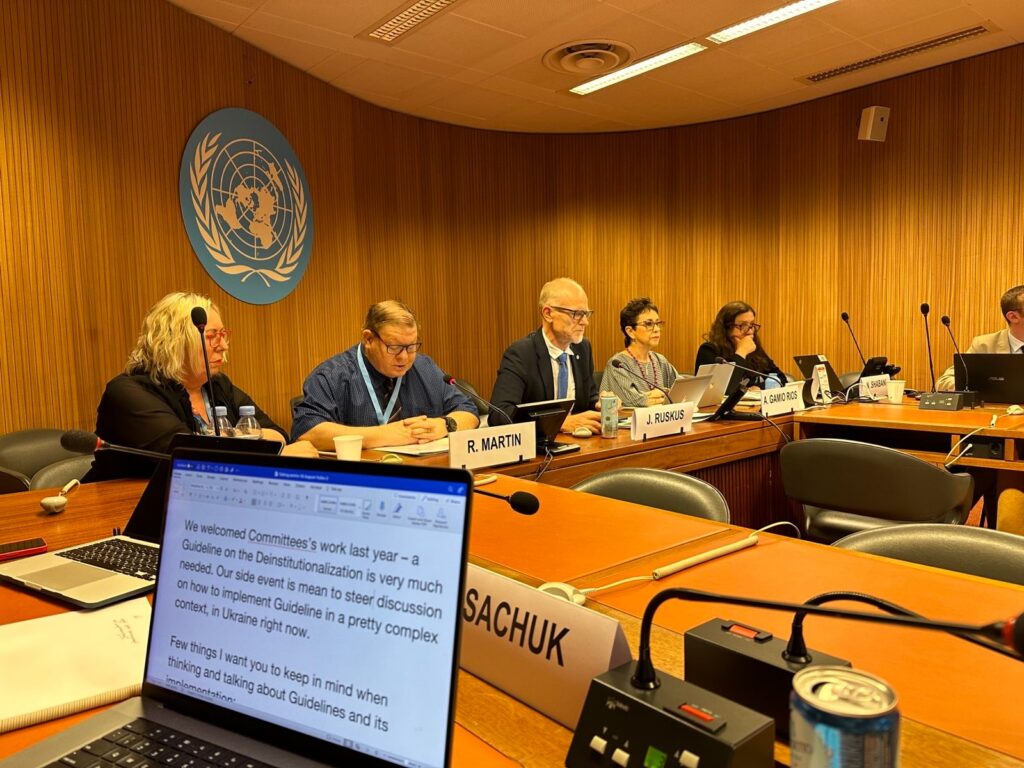
Panel discussion “UKRAINE RECOVERY: Humanitarian Donors’ Obligations Should Ensure Inclusion, Not Institutions for Persons with Disabilities“
As disability-led human rights organisation FFR calls to donor states, UN agencies and other humanitarian actors to:
- Read and follow the Guideline, ask CRDP Committee for additional instructions and come up with consolidated plan how to provide humanitarian assistance but avoid rebuilding residential care system
- Coordinate efforts and programming among themselves and with OPDs and CSOs in particular in mainstreaming human-rights model of disability and deinstitutionalisation efforts
- Stop investing funds in new institutions
- Only support programs and projects following article 12 of the CRPD
- Ensure all housing support programs prioritise accessibility and support-services as key criteria
- Mainstream disability-inclusive international development actions as keen as maintaining gender applying twin-track approach and ensuring meaningful participation of Ukrainians with disabilities throughout all stages: planning, designing, implementation and evaluation
We ask our EU partners and Euro Commission to help us design our DI and social policy reform and make it a key milestone in EU-Ukraine accession.
We also urge Ukrainian government to be transparent and coordinate their work with OPDs and CSOs – we should be key partner in developing all parts of DI and social policy reforms. And the first step is to make a public commitment to cooperation and joint development of adults DI strategy!