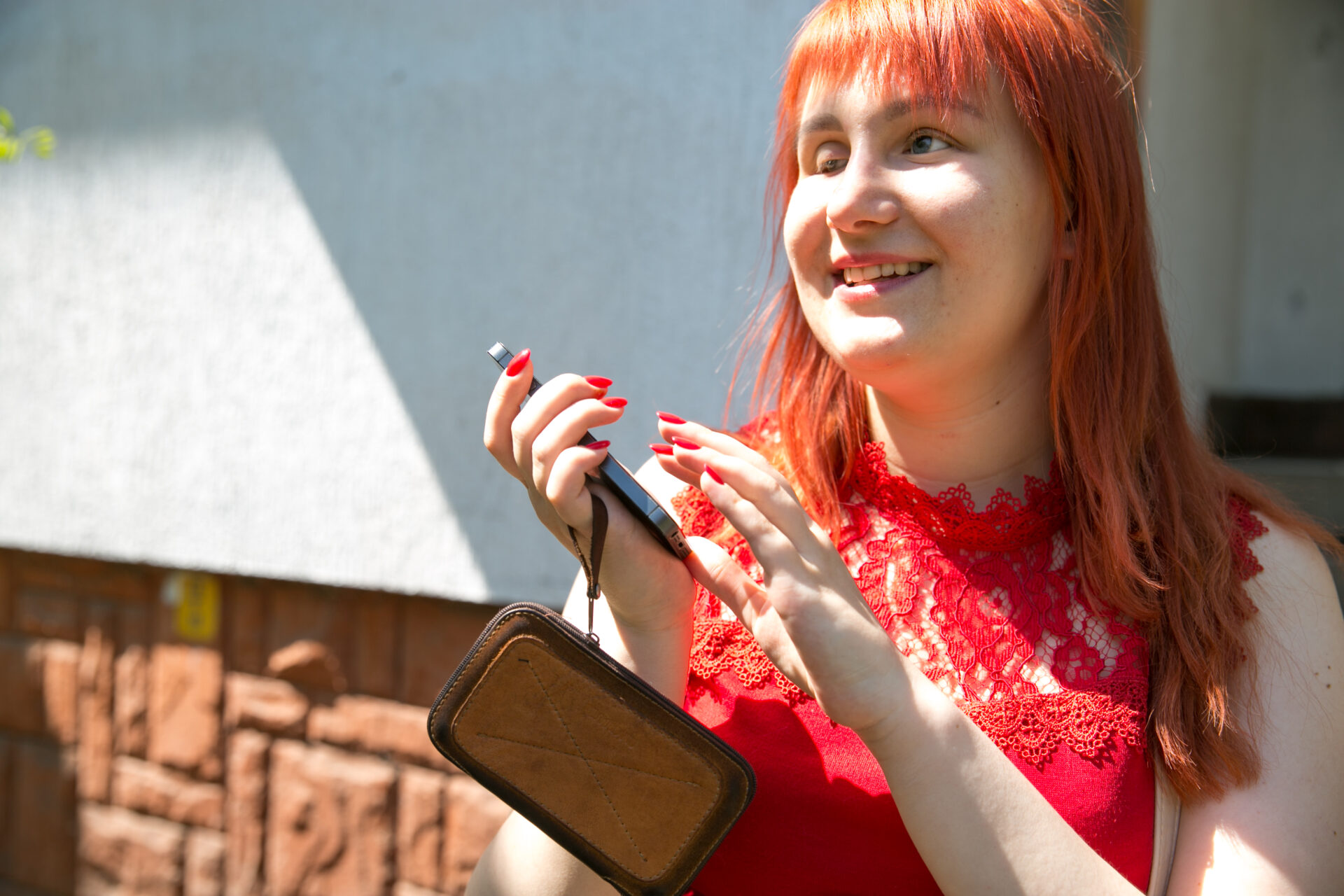
Striving “To Be Free”: The Lives of Internally Displaced Girls with Disabilities
Since 2017, the organization “Fight for Right” has been supporting people with disabilities in Ukraine by providing humanitarian aid, legal and psychological assistance, and fostering human potential. Following the onset of Russia’s full-scale invasion of Ukraine, the emergency response team “Support and Protection” has offered evacuation assistance and targeted aid in assistive technologies. As part of the joint “Fight for Right” and “Austausch” project, we continue to share the stories of internally displaced Ukrainian women and Ukrainians with disabilities.
To address the ongoing devastating impacts of Russia’s full-scale war against Ukraine, especially affecting internally displaced people with disabilities, various initiatives have been consistently implemented in Ukraine over the past two years to support individuals with intellectual and psychosocial disabilities. One such initiative is the development and implementation of independent living services for people with intellectual disabilities within communities.
This article will explore the changing lives of people with intellectual and psychosocial disabilities who have transitioned from boarding schools to supported living housing facilities. We will delve into their memories of life in institutions, their journey to a supported home, how they are adjusting to their new lives, and their aspirations for the future.
According to the National Social Service of Ukraine, as of January 1, 2023, the social protection system included 260 boarding schools for older citizens, adults with disabilities, and children with disabilities, as well as psychoneurological boarding schools, excluding those under occupation. In total, about 41.8 thousand people live in those institutions. The difference between living in residential institutions and independent living in communities lies in the restrictions imposed on individuals. In residential institutions, people cannot make their own decisions, choose their living arrangements (including living alone), or deviate from a strict daily routine. Some of these people have intellectual and/or psychosocial disabilities.
Foreign studies indicate that transitioning people with intellectual and psychosocial disabilities from residential institutions to the community has positive outcomes. Specifically, this transition improves their quality of life, opens up opportunities for choice and autonomy, and enhances their access to services and participation in community life.
In particular, the UN Convention on the Rights of Persons with Disabilities guarantees the right of people with intellectual and psychosocial disabilities to live in the community. According to the Convention, discrimination and segregation of people with disabilities constitute violations of human rights.
During the winter, I visited several supported housing facilities created by the public organization “Dream Workshop” in Lviv.
The supported living service offers apartments or houses to people with disabilities aged 18 and older. Additionally, it provides comprehensive assistance in developing self-care skills, housekeeping, medical support, etc., as outlined in the Ministry of Social Policy Order No. 956, “On approval of the State Standard of social services for supported accommodation for the elderly and persons with disabilities.”
After Russia’s full-scale invasion of Ukraine, Dream Workshop managed to open these houses for young people with intellectual disabilities, aged between 18 and 40. They had previously lived in various boarding schools, hospitals, and sanatoriums.
These houses are modern buildings located in well-maintained areas near the center of Lviv. Nearby, residents have access to shops, restaurants, social services, and parks, which contribute to a comfortable living environment and promote socialization.
In one of these houses, I met two girls who, despite leading very similar lives – facing intellectual disabilities, difficulties in relationships with their mothers, years spent in institutions, and evacuation due to a full-scale Russian invasion – have each found their own path to inclusion in the local community after obtaining the status of “internally displaced persons”.
Maryna’s story
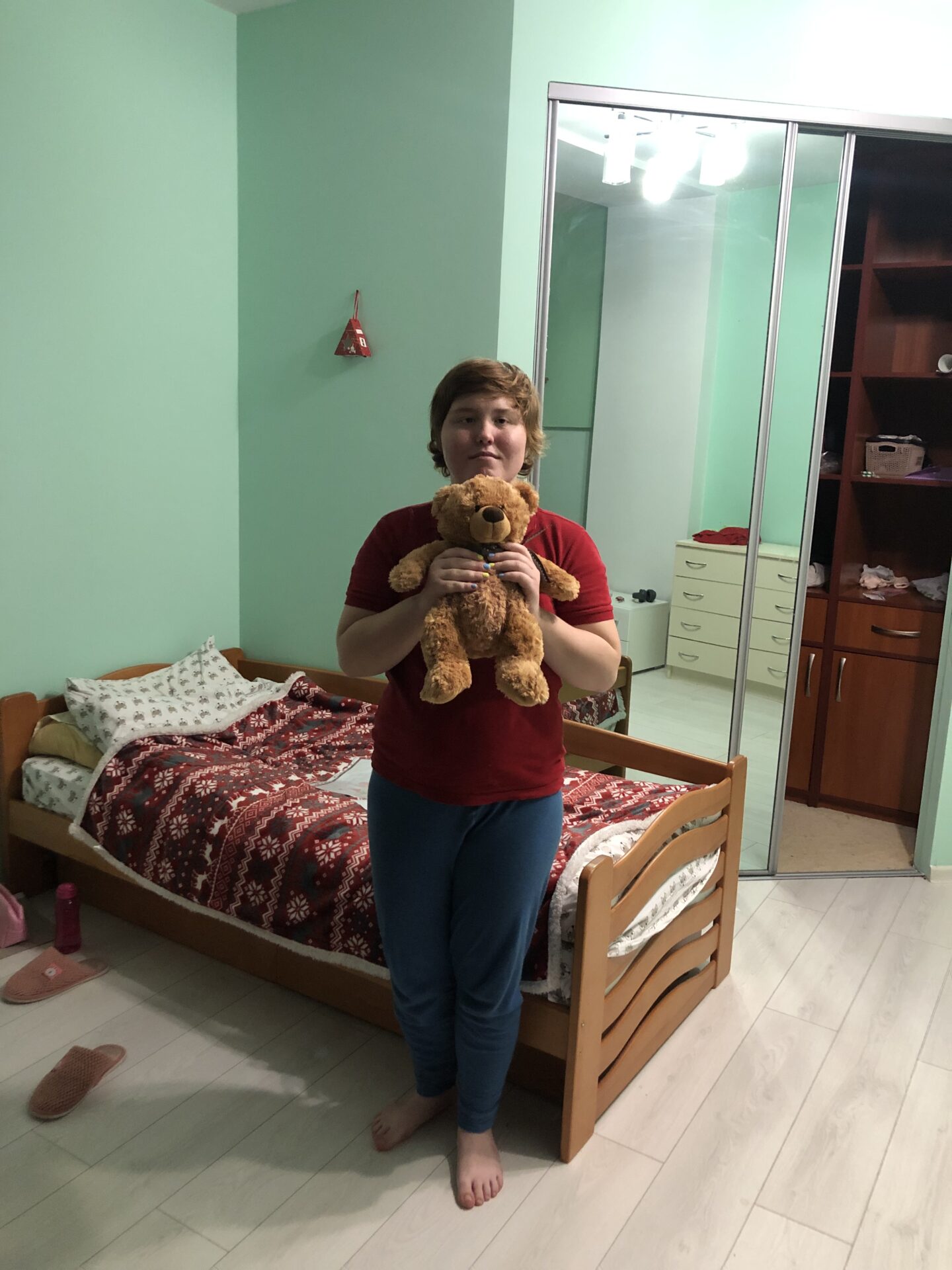
Maryna, a 21-year-old from Kharkiv, lives in the supported housing facility run by “Dream Workshop”.
She comes from a large family, with six other siblings besides her. She rarely talks about her childhood and the people who were close to her then.
Maryna attended a specialized school and later trained as a cook. But she struggled to find a job:
“They tell me, “You’re too young, come back later.” But I am an adult.”
For equal access to employment, people with intellectual and psychosocial disabilities should be provided with support and reasonable accommodations. This might include assistance from a social worker, a gradual introduction to the work process, and opportunities to understand work responsibilities. In Ukraine, only a few initiatives or public organizations focus on the employment of people with intellectual disabilities, including “Emaus: Support Center for People with Special Needs,” “Good Bread from Good People,” and a few others.
After coming of age, Maryna lived in a psychiatric hospital in Kharkiv. She didn’t want to talk about her experience at all. She just said she felt bad there. She missed her mother, brothers and sisters. But now, Maryna confidently states that she will not return home, believing that her mother “doesn’t need me.”
A turning point in her life was the onset of the full-scale Russian invasion of Ukraine. In the early days of the invasion, patients from the psychiatric hospital where Maryna then lived were evacuated to the Lviv Regional Clinical Psychiatric Hospital.
For the first time, Maryna left Kharkiv, traveled by train, and ended up in an unfamiliar institution in Lviv.
Maryna recalls: “The hospital was bad. I was afraid. I wanted to go home. I didn’t want to stay there.”
In the spring of 2023, the Dream Workshop team began searching for residents for the first supported living housing facility and met Maryna. The final bilateral decision to move into the house was preceded by several meetings to get to know each other better.
In May 2023, Maryna left the institutional care system and moved to a supported facility. She also began attending a day support workshop for people with intellectual disabilities run by Dream Workshop.
Anzhelika’s story
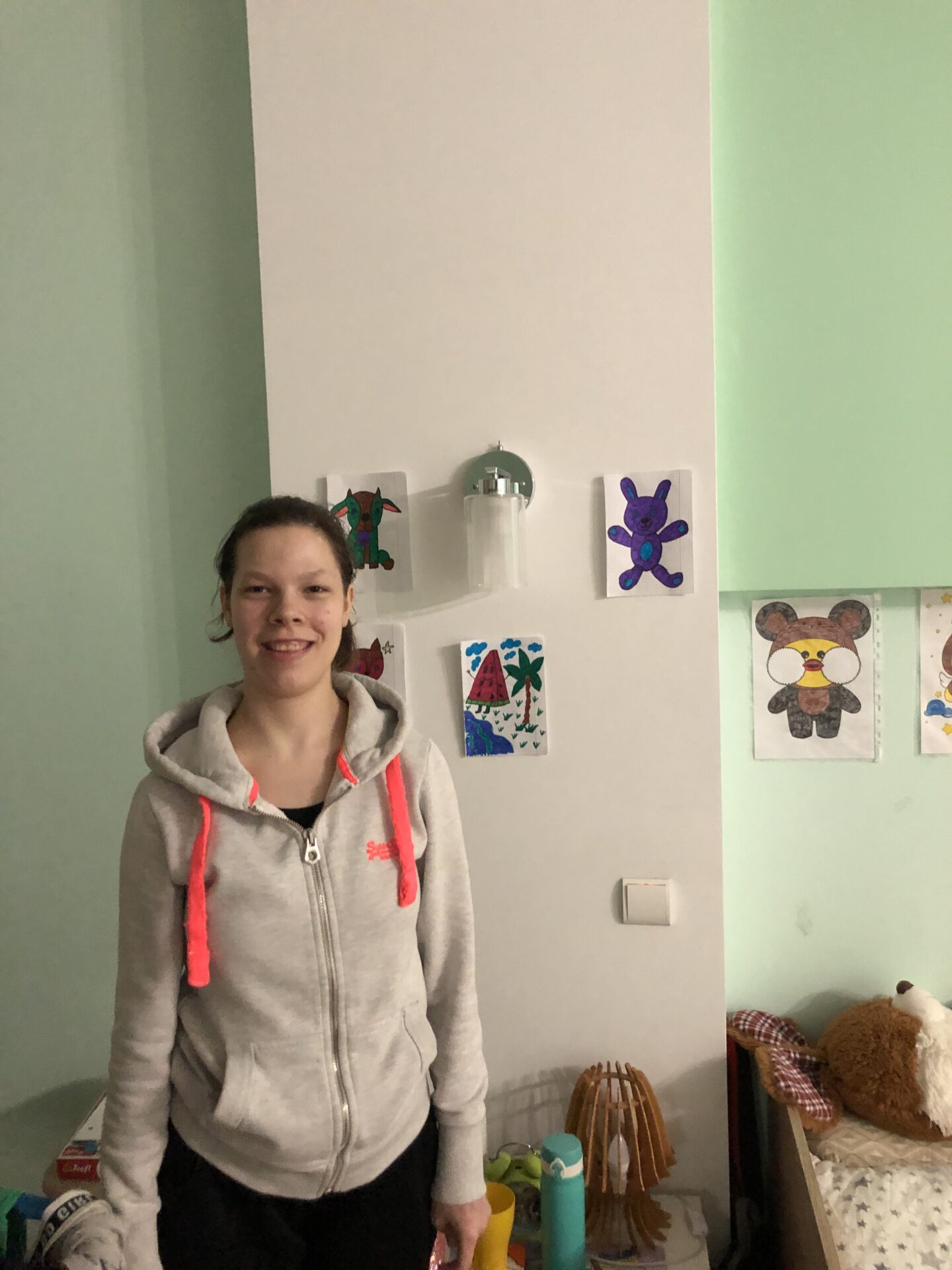
Anzhelika is a resident of the supported housing facility run by “Dream Workshop”.
Anzhelika is 18. She’s from Kherson region.
Before the full-scale invasion, she attended a specialized boarding school and had little contact with her family. Now she has resumed contact with her sisters who are in the Kherson region. However, her relationship with her mother, who has an alcohol addiction, remains complicated.
Anzhelika says she does not remember her childhood years. Her life story begins with memories of her mother’s unacceptable treatment and her time in a boarding school. Comparing her home life to school, the girl recalls feeling better at school, where she had friends, several supportive teachers, and classes she enjoyed. Such positive stories about boarding schools are the exception rather than the rule among those who studied and lived in such institutions. It’s important to acknowledge that boarding schools often have dedicated staff who teach and care for children, provide regular meals, and offer material support. However, children growing up in these institutions miss out on the daily concerns and activities that their peers experience outside of institutional settings.
After February 24, 2022, Anzhelika, her younger brother, and their foster family were evacuated to Germany. However, before reaching the age of majority, Anzhelika and her brother returned to Ukraine. Her brother was adopted by another family, and Anzhelika began to live in Bukovo boarding school in the Lviv region.
She quickly adapted to life in the boarding school, made friends, and began assisting the staff in caring for girls with complex disorders. She recalls, “I watched over the children and rushed to attend to the bedridden in another building. At four o’clock in the morning, I would help the immobile residents, lifting them from their beds and placing them in wheelchairs. Throughout the day, I’d be constantly on the move… and by evening, I’d assist them from their wheelchairs back to their beds… I could even carry a heavy man. I moved tirelessly like a tank, back and forth, back and forth.”
In fact, the tasks Anzhelika performed are typically the responsibilities of the nurses and teachers at the institution. On one hand, as Anzhelika herself notes, this was her own desire. On the other hand, such assistance is clearly valued, as it is provided voluntarily by the residents of the institution. This help is particularly valuable because the staff is often insufficient in such institutions.
Last summer, Anna Ivanicheva, the founder of “Dream Workshop,” along with her colleagues, visited Bukovo to meet the residents of the boarding school. Anzhelika immediately and unequivocally decided that she wanted to live in a supported house to “be free.”
Anna Ivanicheva recalls that Anzhelika approached her with a request to live in the house:
“We had preliminary communication with the headmaster (auth. of Bukovo Children’s Boarding School) he recommended several girls. And we came to meet them. Since we were at a boarding school in Bukovo for the first time, we were given a tour. A flock of girls followed us, each sharing something about themselves. Anzhelika was one of them. She decided that she wanted to live with us. Next time we came to see Anzhelika.”
Since September 2023, Anzhelika has been living in a supported housing facility. She shares a room with Maryna. For the first time in a long while, Anzhelika feels harmonious and safe and has no plans to return to her family:
“I don’t want to go back to Kherson. It’s not my life; it’s theirs. I feel good and calm in Lviv now.”
“I want to be together”: the lives of Maryna and Anzhelika in a supported living house
The girls live in the house with four other male residents and assistants. On the ground floor, there is a common area where the young people eat, socialize, watch movies, or play board games.
Maryna recalls that she became much more cheerful and calm when Anzhelika appeared. They assist each other with daily tasks, independently attend workshops where they craft handmade products, including candles, and engage in communication and learning.
Thanks to the support services in the house, the girls washed their clothes for the first time, prepared dinner independently, and had the opportunity to visit a beauty salon or museum for the first time. For the first time, they had choices: selecting clothes, food, jewelry, leisure supplies, deciding wake-up times, or determining how to spend their free time.
The first thing Maryna showed me was her personal belongings – jewelry, personal care products, and toys – all of which have ample space and can be used as she wishes.
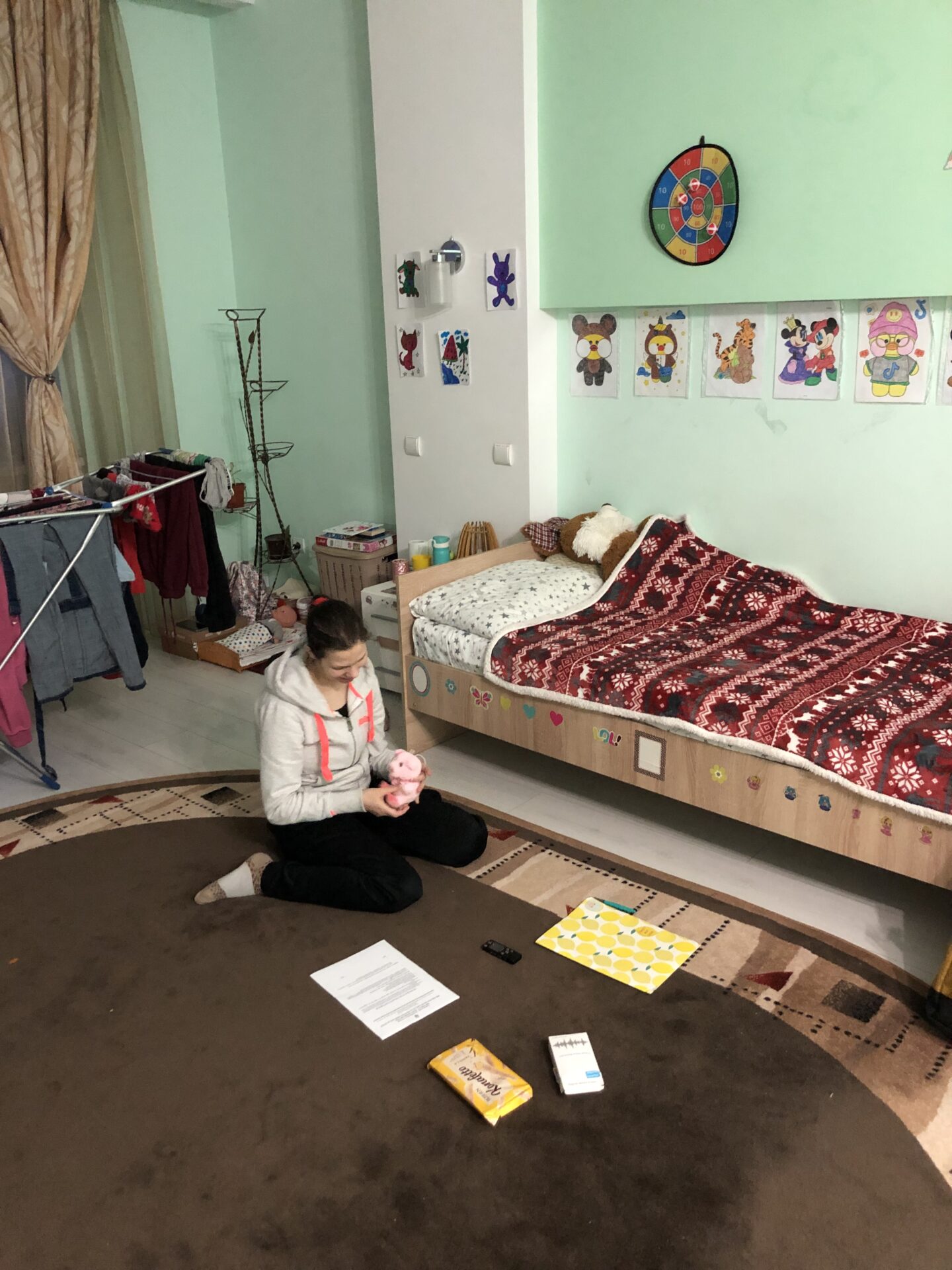
Maryna talks about her toys and drawings during the conversation.
The girls and I talked about their past, present, and future. They have a clear vision of how they want to live and what dreams they want to fulfill. The girls would like to continue living in the Dream Workshop house and get a profession. Maryna dreams of treating the military, and Anzhelika dreams of painting beautiful things.
I am hopeful that the “wave” of establishing homes in Ukraine, where people with intellectual and psychosocial disabilities receive support for a decent life and the pursuit of their dreams, will continue to grow.
Hanna Zaremba-Kosovych,
researcher of disability studies
The project “Barrier-free Safety for People with Disabilities” is the part of @INKuLturProgramme implemented by @Austausch e.V. together with Eastern Partnership countries funded by the German Federal Foreign Office.
#CivilSocietyCooperation #BarrierFreeAccess #INKuLtur